
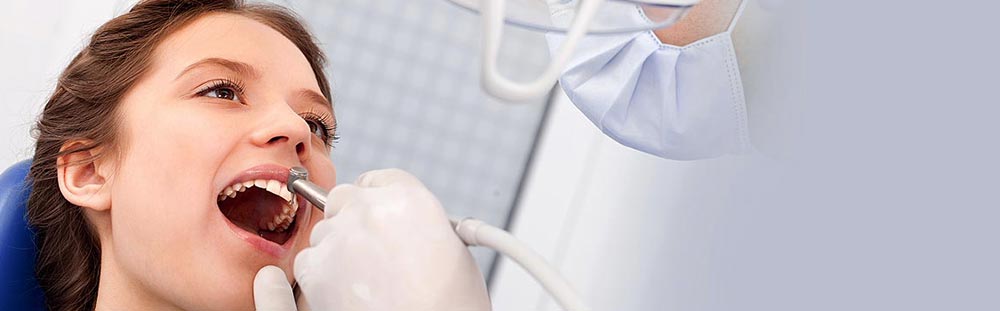
Click here to help this girl keep her smile

Toothache


Dr. Steven R. Pohlhaus

Home ] Laser Dentistry ] TMJ Disorders ] Bruxism(Teeth Grinding) ] Mouth Ulcers, Cold Sores, etc ] Oral Cancer Info ] Medical / Dental Correlations ] Dental Prevention ] Gingivitis ] Periodontal Disease ] Halitosis (Bad Breath) ] Esthetic Dentistry ] One Hour Whitening ] Bleaching, Bonding & Veneers ] Sensitive Teeth ] [ Toothache ] Root Canals ] Crowns ] Bridges ] Implants ] Dentures and Partials ] New Patient Info ] Directions to Office ] Dr. Pohlhaus' Resume' ] Dominican Dental Project ]   Pain Relief Info


Google

Web www.stevedds.com   

Member

Some warning labels are tough to swallow.


Many conditions can cause pain in the teeth. The importance of a proper diagnosis can not be overstated. Most of the time dental diagnoses are straightforward, but the exact cause of the tooth pain is not always evident. One of the difficulties doctors face in diagnosing is that patients present with a variety of pain perception, thresholds, and tolerances. However, over treatment or mistreatment can be avoided with a little proper detective work.  What follows is a list of diagnoses with their usual symptoms and treatment.

Glossary


    First a short vocabulary lesson would be helpful to intelligently comprehend what follows, so here is a little glossary to get you started.

Pulp - The "nerve"...this is the living tissue inside the tooth. It contains connective tissue, blood vessels, and sensory nerves.

Pulpitis - Inflammation of the pulp. 

Periodontal Ligament - this structure is a series of microscopic fibers connecting the root of the tooth to the jawbone. It has very sensitive nerves designed to sense both pressure and pain.

Caries - Tooth decay. Caries is an infection of the tooth caused by specific bacteria. It is this infection which results in many of the symptoms of a toothache

Abscess - An infection characterized by a localized buildup of purulence (pus)

Enamel - Hardest part of the tooth found on the other surface of the crown. It is what you see in the mouth. Enamel is lighter in color than dentin.

Dentin - The hard part of the tooth below the enamel which surrounds the pulp chamber, most of the tooth is dentin. It has microscopic channels (pores) which can transmit both irritants and medicine to the pulp. Dentin is darker in color than enamel. It appears in the mouth as a somewhat darker or more yellowish part of the tooth between the gum and enamel.

Necrotic - means tissue has died

Conditions

·         Dentin (root) Sensitivity

o        Symptoms

§         Cold sensitivity to liquids and sometimes air, less often to hot liquids. Short duration with no lingering or spontaneous pain. No biting pain. Root surface usually visible due to gum recession.

o        Cause

§         Exposed dentin (root) surface due to gum recession, trauma, bruxism, erosion, or abrasion

o        Treatment

§         Use desensitizing toothpaste for two weeks. If no resolution have dentist examine tooth to rule out decay. Dentist can treat with in office desensitizing treatments. Dental restoration may be needed if tooth has lost tooth structure. Usually responds to treatments though some teeth can be very resistant to therapies.


·         Reversible Pulpitis

o        Symptoms

§         Cold sensitivity to liquids and sometimes air, less often to hot liquids. Short duration with no lingering or spontaneous pain. No biting pain. Cavity in tooth may be visible but this is unlikely. (note similarity to dentin sensitivity)

o        Cause

§         Caries (decay), byproducts of the infection irritate the pulp, though the pulp itself is not infected by the bacteria. At this point the germs are in the dentin only. 

o        Treatment

§         Restoration with appropriate procedure. When the dentist fills your tooth the infection (caries) is meticulously removed. Caries indicating dyes help the dentist in this process by staining the part of the tooth which is infected. 


·         Irreversible Pulpitis

o        Symptoms

§         Severe temperature sensitivity which often lingers for minutes or more. Spontaneous, throbbing pain is often present as well, sometimes causing sleep difficulties. Analgesics may be needed. Biting pain usually not present but will present on occasion or as tooth becomes necrotic (see below). Visible decay may or may not be present.

o        Cause

§         Infection of the pulp secondary to a carious lesion in the tooth(cavity). The bacteria has penetrated beyond the dentin and now inhabits the pulp. Eventually the nerve will die and become necrotic, hence the irreversible nature of this condition.

o        Treatment

§         Root canal or extraction


·         Necrotic Tooth

o        Symptoms

§         Pain from irreversible pulpitis may subside almost completely. Eventually tooth may abscess where the infection of the pulp leaks from the tooth into the periodontal ligament and jaw bone below. At this point the pain can become quite severe. Biting pain is evident, often resulting in avoidance. As the abscess worsens swelling may arise in the tissues adjacent to the tooth. Left untreated this swelling can become visible on the patients face. At this point fever, swollen lymph nodes, and malaise may occur. General sepsis and/or swelling of dangerous areas may result, resulting in a true emergency.

o        Cause

§         Bacteria from the infected pulp infiltrate the periodontal ligament and then the jaw bone proper.

o        Treatment

§         Root canal or extraction. Additional surgical intervention is sometimes needed to drain the infection. Antibiotics are rarely indicated , but may be useful in some severe infections.


·         Cracked Tooth Syndrome

o        Symptoms

§         Occasional cold sensitivity is sometimes present. Pain on biting hard foods (pretzels, carrots, etc.) is the hallmark of the condition. This biting pain is inconsistent and usually occurs when the involved cusp is contacted in a certain way. Involved tooth can be difficult to localize.

o        Cause

§         Hairline fracture in tooth caused by trauma, bruxism, habits, etc.. Biting on hard food causes crack to open and close slightly irritating the pulp. Cold is more readily transmitted to the pulp as well. Decay is often found along the fracture deep in the tooth contributing to the symptoms via a reversible pulpitis (see above). Cracked tooth syndrome can be confirmed by your dentist doing a bite test and examining the tooth with a fiber optic transilluminator, a bright light which shows fractures.

o        Treatment

§         A crown effectively splints the tooth, eliminating symptoms in most cases. Sometimes a root canal is needed to treat teeth not resolved by the crown alone


·         Periodontal

o        Symptoms

§         Dull to severe ache around a tooth or teeth. Swelling of the gums and/ or pus formation may be present. Temperature sensitivity not usually a problem. Tooth may feel loose, accompanied by a bad taste in the mouth and bad breath (halitosis).

o        Cause

§         Acute infection secondary to periodontitis.

o        Treatment

§         Localized drainage and scaling. Antibiotics indicated in more severe cases.


·         Conditions Which May Mimic a Toothache

o        Temperomandibular Disorder

o        Bruxism

o        Sinusitis

o        Trigeminal Neuralgia  

o        Atypical Facial Pain 

o        Heart Attack 

o        Tumors